


 Apple Podcasts
 Spotify
 Castro
 RSS Feed
 Youtube Music
 225: Blue Collar vs White Collar Salary, Anthropic Claude Money, Reddit HBO Max Exploit?
Key Takeaways
- Former presidential candidate Andrew Yang recently voiced support for AI regulation and universal basic income concepts, warning that the rapid advancement of artificial intelligence will eliminate numerous jobs and require economic safeguards like government dividends.
- Security researchers have flagged an alarming rise in 'ClickFix' attacks, where hackers compromise legitimate platforms like Reddit and trick Mac and Windows users into running malicious terminal scripts disguised as CAPTCHAs or software fixes.
- The notorious ShinyHunters hacking group published hundreds of thousands of files from a Florida state vehicle database after officials refused to pay a ransom, highlighting ongoing vulnerabilities in government data security.
- Host HD breaks down the realities of climbing the corporate ladder across generations, addressing the frustrations of Gen Z workers dealing with high living costs, housing pressure, and delayed retirements from older generations.
- Protecting personal data online has never been more critical, with widespread breaches like the Florida DMV hack emphasizing the need for robust identity monitoring services.
Go to our sponsor https://aura.com/techtualchatter to get a 14- day FREE trial and see if your personal information has been leaked online
------------------------------------------------------------------------------------
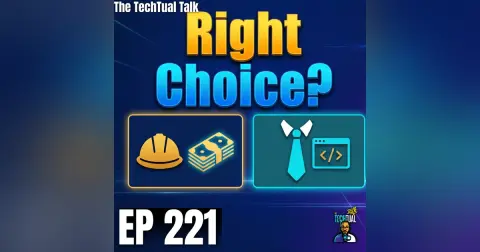
In Episode 221, HD goes solo dolo to cover Andrew Yang’s AI dividend warnings, Anthropic testing "Claude Money" with live bank links, and leaked GoogleBook photos! He breaks down ClickFix malware hitting Mac/Windows via compromised Reddit ads, ShinyHunters leaking Florida DMV records, and new Microsoft Teams security blocks. Plus, HD shares real talk on Gen Z vs. Boomers in corporate America, blue-collar vs. white-collar salaries, interview red flags, and ending hiring bias! Tune in for your weekly dose of cybersecurity news, hot takes, and honest tech career advice!
------------------------------------------------------------------------------------
Get your It pro career packages here : https://app.techtualconsulting.tech/bundles/
Book a call: https://calendly.com/techtuaulconsulting
join the discord here: https://discord.gg/8jryx9CUxw
ask your pod questions here: techtualquestions@thetechtualtalk.com
--------------------------------------------------------------------------------------
➡️ Follow us on social media:
Instagram: https://www.instagram.com/techtualchatter/
TIkTok: https://www.tiktok.com/@techtualchatter
Twitter: https://twitter.com/TechtualChatter
LinkedIn: https://www.linkedin.com/in/henri-davis/
Follow Cybershortieee
Youtube: @Cybershortieee
Instagram: https://www.instagram.com/cybershortieee/
Tiktok: https://www.tiktok.com/@cybershortieee
Follow the Pod:
https://www.instagram.com/techtualtalk/
-----------------------------------------------------------------------------------------------------
00:00:00 intro
03:15 Why Millennials Cannot Retire
11:40 FOMO and Housing Pressure
12:56 Andrew Yang on AI Regulation
22:52 GoogleBook Leaked
24:26 ClickFix Reddit Malware Scam Breakdown
28:16 Florida DMV Data Breach
29:39 Aura Sponsor Identity Protection
31:17 Iced Coffee Interview Debate
34:29 Claude Money Privacy Concerns
38:36 How to Govern AI Agents
41:19 MITRE ATLAS AI Attacks
44:04 Don’t Quit your JobvToo Early
49:10 Teams Malware Controls
51:13 Conditional Access for Documents
54:18 Degrees vs Trades Debate
01:02:03 Hiring Bias Hurts Talent
01:06:07 Wrap Up and Next Steps
Frequently Asked Questions
What is Andrew Yang's stance on AI development and regulations?
Andrew Yang has called for slowing down AI development and urges Congress to implement regulatory leadership instead of relying on tech CEOs to self-police, while advocating for economic dividends funded by trillion-dollar AI companies.
How do ClickFix malware attacks trick computer users?
ClickFix attacks use fake websites or compromised corporate accounts on platforms like Reddit to display fake CAPTCHAs or anti-bot prompts, tricking users into manually copying and pasting malicious text into their Windows command prompt or Mac terminal.
What happened in the Florida DMV data breach?
The ShinyHunters hacking group breached the Florida Motor Vehicle database using a police officer's compromised credentials stored on a personal device, ultimately publishing hundreds of thousands of vehicle ownership records and personal data after a ransom demand was refused.
===
[00:00:00] If you have parents that's never probably worked a professional job or anything like that, and you are trying to go in corporate America, what their advice is gonna be to you will not be that helpful because of just the differences of ways that you want to work and the ways that they have worked in their career.
[00:00:16] I would advise you to go find people who are older that have been working in corporate for years and get advice from them, 'cause they've been in long enough, they've survived a lot of different things. All these... Like, the people who are still standing now survived being replaced by, like, computers. You got the internet, AI, all these different things, 'cause there's been so many industries that's been disrupted
[00:00:50] You are watching the Tessa Show Talk hosted by IC and Savage Shorty Hit the like [00:01:00] button All right, let me wake y'all up real quick
[00:01:05] If you listening to this on audio, that just woke you up. But welcome back, guys, to episode 221. I'm your host, HD, holding it down solo dolo while Cyber Shorty is out traveling around the world, and I knew I had to come talk to y'all again 'cause y'all been showing so much love. And if this is your first time on the channel, please hit the like button, subscribe, like my daughter said, and yeah, everything else will be forgiven.
[00:01:30] Um, we got a great show, uh, for you guys today. Some of the topics we have are, let me get them up real quick. So, uh, Andrew Yang has broken the silence on AI and the backlash in Silicon Valley. Anthropic wants to let AI control your money or at least look over it. Um, Google is coming out with a Google Book, so I wonder what the difference between the Google Book and a Chromebook will be.
[00:01:57] Millennials should retire, and [00:02:00] when should you resign? And then we got other topics that are in between that, but those will probably be the major ones that, uh, we discuss today. But, um, before we get into the, the episode, man, it's been a rough week for your boy, man. Um, lost a, a good childhood friend of mine, man, Virgil Williams, man.
[00:02:17] Um, gone too soon. Wonderful human being. Honestly, like Facebook, you wouldn't find anything negative anybody ever said, uh, with him. Known him since I was 10 years old, always positive. Wasn't a typical, like, the-- what you see, the jocks in the movies, he's nothing like that. The dude was immensely talented, impacted everybody he encountered, impacted all the athletes that he worked with and that are still, like, playing in secondary and now the pro level.
[00:02:45] And so yeah, man, the good ones go too soon, man. But, um, you know, so RIP to Virgil, man. Um, your memory gonna live on, your legacy gonna live on, man. And, you know, if you got a shot-- I ain't got a shot right now, but if I had a shot right now, I definitely would take a shot [00:03:00] for you, brother. But yeah. But, you know, to kinda get off some of the sad stuff, um, outside of the week, it's been, it's been a, like I said, it's been a, a trying week, a very different week.
[00:03:11] Some news that I wasn't expecting to see. But the episode is not gonna be filled with doom and gloom. Matter of fact, our first topic is about why can't millennials and boomers retire. And so I'm actually going to, uh, find a video that spurred all this, and then we're gonna have a talk. How is Gen Z supposed to climb the corporate ladder if all you boomers and millennials won't retire?
[00:03:34] Retire so we can have your jobs and make more money. So h- he did double down on that, and it was hilarious because of-- People don't understand. So millennials, typically born, some charts will say 1981, others say 1980, but typically 1980 through '95, I would say, give or take. Some things say '96, but I'm gonna really say '95, because even when you get to '92, [00:04:00] you start-- I'm born in '92, you get to pushing it on how much you can remember of the '90s.
[00:04:03] So I try to base it off of that. Like, if you, if you can't remember anything, like, even in the '99 and 2000, all that kind of stuff, you are not a millennial. And, or as you can say, like a '90s baby Now, what he don't realize is most people are set to retire, I wanna say the retirement age is 65, if I'm not mistaken.
[00:04:24] The oldest millennial should be, matter of fact, I can look this up really quick. Uh, so right now, the oldest millennial is 45 years old. Birth year for millennials were born between 1981 and '96. So these people are nowhere near the retirement age. Now, the boomers are. Like, the boomers are at retirement age.
[00:04:47] They are in their 60s, some in their 70s. Let me see. What's the... Yeah, boomers from 1946 to 1964. These are a lot of the, some of the people that are still working today that are in your way, that will not let you go up [00:05:00] the corporate ladder. But let's go and even add some more stuff that I seen a lot of hilarious stuff that was referencing this is, to be quite frank, and I know, I get it too, because of some of the Gen Z-ers feel like they're Z- Zillennials or Zennials, whatever you wanna call it, because of, they feel like, like if you're born in, you know, '97 to whatever, they feel like they are different from the younger Gen Z-ers.
[00:05:24] Which I believe though too, 'cause like my siblings are born in '04, '05, 2008. They definitely did grow up differently from somebody born in '97, '98, '99. So they do get lumped in with the bunch. But m- a lot of the Gen Z-ers will be stuck because of, like we said, lack of effort, or not necessarily effort, it is, uh, initiative, lack of soft skills, basic comprehension.
[00:05:54] Like that video is how a lot of people sum up millennials. Like, I mean, uh, [00:06:00] Gen Z Irritable, they don't know much, and they get on your nerves. They're not professional, all those different things. And in fact, he doubled down on it, which like I said, it's all content by the way. I don't know how old the young man is, right?
[00:06:15] Um, but no, you guys will pretty much... You're in a different position than we were. So for example, 10 years ago was 2016. I pretty much was on my second corporate job at that time. Still pretty much starting from the bottom. Now, if I was 22 in today's time, it would definitely be interesting trying to move about, but I would probably use the same things that everybody else has used to go further in their career.
[00:06:48] Now granted, the same advice does not work. So here's free game. If you have parents that's never probably worked a professional job or anything like that, and [00:07:00] you are trying to go in corporate America, what their advice is gonna be to you will not be that helpful because of just the differences of ways that you want to work and the ways that they have worked in their career.
[00:07:10] I would advise you to go find people who are older that have been working in corporate for years and get advice from them, 'cause they've been in long enough. They've survived a lot of different things. All these, like the people who are still standing now survived being replaced by like computers, you got the internet, AI, all these different things.
[00:07:30] 'Cause there's been so many industries that's been disrupted throughout the years. Like for example, if you think about people having pagers, like that was a big thing at one, one point in time. It's not now. Let's think about regular cable television, house phones, computers, regular cashiers. All these things have been disrupted now with the technology change of self-checkout, AI, robotics, cell [00:08:00] phones.
[00:08:01] Think about even computer sales. At one point in time, a lot of stuff that we do on our smartphones you only could do on a computer at one point in time Now you got also these, all these different SaaS products out now with AI, and they're trying to eliminate, like, all these different niche people you go to to get things done.
[00:08:17] So I would just say, like, talk to them, the ones that's still here. Some of the people, they had to go pivot because they didn't keep their skills current and they didn't know how to navigate. It's definitely a skill to learn how to, to go up the corporate ladder if that, is that, if that's what you want to do.
[00:08:31] If that's not what you wanna do, continue what you're doing. Like I said, I still believe people who want to work a job, whether it's a regular job or super high-paying job, you should be able to live a, a decent life. You should at least be able to afford rent and food and not have to starve yourself or do anything crazy to survive, because I feel like it's a necessity.
[00:08:50] You shouldn't be having to jump through hoops to just have somewhere decent to stay. Not anywhere where nobody would wanna stay, but, but somewhere decent. So [00:09:00] I doubt they'll ever regulate prices of things anymore. But if they did, I think a lot of you guys would be okay. Because that's another thing too I wanna say is that Gen Z has grown up chronically online.
[00:09:16] Like, I wanna see... Let me see something. I'm gonna look up what percentage of Gen Zers grew up with a cellphone. So this is, let me see what is these, uh, um- things come from. So there's a lot of different stats, right? National Institute Yeah, so the Nasti- uh, National Institute of Health had this youth perspectives on recommended ages of mobile.
[00:09:46] Um, yeah, so it had a lot of different articles here, so I would have to go fact check some of these. But
[00:09:58] It says virtually [00:10:00] 100% of Generation Z grew up with a cell phone in some capacity. Okay, so the in some capacity means they probably had access to one but didn't necessarily have one. So we can't roughly say 100%, but they definitely did have access to them earlier. Like if I'm even talking about my brothers, they had access to cell phones and smartphones actually way before I did.
[00:10:22] Uh, so Gen Z born roughly between '97 through 2012 cannot remember a world before mobile technology. When looking specifically at personal smartphone ownership during childhood, the data shows a clear timeline on how they grew up with these devices. So it says by age 10, roughly 25% to 33% of Gen Zers had their very first smartphone.
[00:10:40] By 11 to 12, about 45% to 53% had received their first personal mobile device or service plan. And by age 14, over 91% to 96% own a personal smartphone. Okay. Now, the reason why I'm bringing that up, and we're gonna get off of this topic 'cause I know Gen Z, if y'all ever watch this, y'all probably feel like, "Man, he always talking about us."[00:11:00]
[00:11:01] But you guys are comparing yourself where you are now. So let's say 2012 is what the youngest Gen Z, so they don't count. We're gonna use my sister's age. We'll say 2008. Those are the youngest legal millennials, 18-year-olds. You guys are comparing your current life right now to people who've been in the industry or working the last 10, 14, 15, 20 years.
[00:11:32] There's gonna be no comparison. There will be outliers in every generation, but that's not gonna be the norm. 'Cause I had a guy in the video that we chopped up from the last episode where the young woman was talking about she saw a lady saying, "Hey, the 100K should be the bare minimum for every woman."
[00:11:51] And she talked about why that didn't make sense because of the percentage of how many people actually make $100,000 or, or six figures. And [00:12:00] one guy said, "Hey, I'm 29 and I'm not making six figures yet." And I said, "You're 29. Relax. You have a lot of time to make the money if that's what you choose to want to make."
[00:12:10] But I get it though. There's a lot of FOMO. Shout out to Drake dropping "FOMO." It's a lot of FOMO with everything that's going on. Some of you is like, "Man, I wanna get a house one day. Like it's unattainable. It's out of reach." It's a lot. I definitely... Look, Gen Z ain't the only people feel like that.
[00:12:24] Millennials feel like that as well. I remember what housing prices used to be, interest rates used to be in these new subdivisions and what they wanna charge you in a pla- to stay in a place where nothing is there. I totally get it, and I respect your feelings. For the people who do not want to be average, you're gonna have to be willing to do non-average things.
[00:12:49] That's what I'm gonna say to you. Okay? That's what I'm gonna say to you
[00:12:56] Now, I think [00:13:00] while we're here, we got a bunch of like AI stuff, and I wanna get into this Andrew Yang piece. So where are we? It says, "Andrew Yang joins chorus of AI skeptics, warns it's time to tap brakes while sharing juicy gossip. The fear is real." So this is a three-minute video. We're gonna check this out
[00:13:26] debate over direct cash payments to Americans. Few people have championed that idea more prominently than former Democratic presidential candidate Andrew Yang. He joins me now live. Uh, great to see you, sir. I think the last time I saw you as we were chatting was New Hampshire around 2020, so great to, great to be in touch again.
[00:13:44] Um, I wanna start where we are on this $5,000 dividend and also b- you know, breach the story of the day, AI, because you were making this proposal for universal basic income back when you were a, a Democratic candidate for president, [00:14:00] um, that closely mirrors in a lot of ways what the president is touching on with these $5,000 checks.
[00:14:04] But your whole central argument was that Americans are going to need money from the government because AI's gonna take everyone's jobs away. So your reaction to the dividends, uh, especially in light of all the news on AI. Well, well first I, I hope that we can slow down the AI development, and I hope that Congress can lead instead of just waiting for the CEOs to self-police.
[00:14:29] Uh, you know, I think most Americans would agree that there needs to be some kind of, uh, regulatory, uh, leadership on this. But yes, I love the dividends, and I was making the case that AI is going to eliminate many, many Americans' jobs, and we should return that value to the American people. You have trillion-dollar companies that are being built on the backs of our data, where these models have hoovered up our information and then built these products that are now going to make some people very, very rich, and that's the value that [00:15:00] should be returned to the American people in the form of a dividend.
[00:15:03] So do you think that the president's right when he says that he might not need congressional action to put these checks in motion? Well, last I checked, Congress does have the power of the purse. Uh, and you would need to get Congress on board. But I will say it's gonna be wildly popular with the American people, because everyone watching this at home knows where $5,000 would go for their own family.
[00:15:27] It's gonna go to food, fuel, car repairs you've been putting off, saving up for your kids. And this money is going to be a direct stimulus for our own balance sheets, which you could argue is the best place to put any money. Uh, right now the money is going up into the cloud. The money can come back to us and then get spent on local mom-and-pop businesses.
[00:15:50] Is that practical to think that Congress can, you know, authorize that kind of a spending plan when, you know, g- getting agreement on filling a [00:16:00] pothole is so hard, much less what you should do, uh, to reign in AI Taxing AI and bots, wildly popular. Distributing checks to the American people, wildly popular, and we already have the mechanisms to do this.
[00:16:15] We've seen it. Uh, so I do think it's possible. Trump accounts, you've seen, uh, money go out to millions of Americans already in that way. This is going to become a common sense solution more and more, Jackie, because i- if you look at the imbalances in our economy, we have to cut the American family in on all of the money that's circulating around, and instead of getting extracted from families in our communities, brought back to us.
[00:16:43] You might be the first, uh, Democrat, certainly former Democrat presidential candidate, to voice support for this policy that the president rolled out at the, uh, at the mini RNC. So thank you for breaking that news with us this morning. And, uh, hope to have you back again soon to talk about all things AI.
[00:16:58] Andrew Yang, thank you very much [00:17:00] for joining us.
[00:17:03] Now, um We've talked about, you know, AI quite a bit on here. Let me, let me change this. So we talked about AI quite a bit on this channel, and so a lot of buzzwords that you hear about AI is about this word, AGI
[00:17:26] So AGI stands for artificial general intelligence, and basically say which is a hypothetical AI system that can match or exceed human cognitive abilities across any intellectual task or domain. I feel like in some instances we are, because if you think about human, well, cog. Let's see something real quick.
[00:17:48] I like to learn in real time. I know what cognitive mean, but if you told me to explain it to you, I wouldn't explain it the best way. So cognitive means relating to conscious mental activities like thinking, reasoning, [00:18:00] learning, and remembering. Now, the thing is, what we know about humans is that we don't even use-- I forgot how much of a brain power we not, we don't use.
[00:18:09] But let's see. I do not believe this, so there are different things that say we use 100% of our brains constantly. I don't. I think there are things that we can't tap into in our brain for a good reason. Because when you think about how fast we process doing something, like think about you doing this or raising your hand or whatever you wanna do.
[00:18:30] You did that instantly with your nervous system. I don't think AI's on that level yet, but, you know, eventually it probably could be, along with robotics and everything else, which would let it displace a lot of people. So there's been a term about like the, that's why these income things are coming out, and it probably could be a form of communism and all this other stuff where people really at the top would be doing anything.
[00:18:57] But it was [00:19:00] interesting. So this says, "To find your AGI, use the basic formula of gross income minus above-the-line adjustments." So I don't know. This'll be something interesting to, uh, check into. But it was interesting to see a Democrat wanting to go with the Republican President Trump's thing, because let's be honest, I've been watching, like, a lot of these things on Jubilee.
[00:19:25] You know, we re-reacted to some stuff with Boomers and Gen Z on Jubilee last week, on last week's episode. And I always tell everybody when I'm talking to them about anything or something I wanna debate, I was like, "Nothing really is black and white." There-- A lot of people are in the gray area of things. A lot of people feel like they have to be one way or another and don't really voice how they really feel.
[00:19:49] They'll hide it or tell people they're close to them about. But truthfully, there is good and bad amongst, like, most people, especially when it come political candidates. By the way, Donald Trump is [00:20:00] not doing the best job. Look at gas and everything else. And another thing, I think, and I could be misspoken here, I'm not finna go through.
[00:20:07] I would love to go through and just Google everything, give y'all like a DJ Academic style episode today. But he was right on one thing. Somebody needs to police the AI companies, because they're not gonna police themselves. You see right now they're in different legal things, people stealing from who.
[00:20:25] These things are capable of doing a lot of stuff. You have whistleblowers. It has to be regulated. The, the most thing that a lot of people are just thinking about right now is like, "I wanna make the most money." Now granted, most of these companies are getting valued very highly, but truth be told, a lot of companies still have not made money from implement AI in their environment.
[00:20:51] The keyword is yet. Eventually they, they will, but not yet. So they decided to cut a lot of payroll to invest in this, [00:21:00] and they have not got the return on investment
[00:21:06] You had CEOs say, "Hey, we thought AI could help us do this, and we're gonna hire these people back." So this is a lot, and as I have on the bottom of the screen, 5K checks. What could 5K do for you? Like, think about it. And I would like, if they're gonna do this, it does not need to be any income limit. Or if it is, it needs to be if you have a family and you are head of household, you make...
[00:21:32] Let's say, I would say they cut the income limit off at, like, half a million or something, because also what happened, the high earners definitely felt ostracized in the Trump days with, like, the extra checks or the stimulus checks that they couldn't get access to. They definitely felt ostracized to that because a lot of people took some losses.
[00:21:53] They couldn't make the money they used to make. And, uh, yeah, so I would say cut it off at maybe, like, half a million. So let [00:22:00] everybody get access to that and let them actually go through into the economy and buy it up. Now, the hard part about that is, though, every time they do stuff like this for us, we feel it in other ways on down the line, and that should not be the case.
[00:22:19] That is where you start getting, "Hey, tax these companies," and all this. And I don't know if it's necessarily about taxing the companies versus changing the rules on how people are taxed. Because technically the, the companies are getting taxed, but based on how the law is set up and you have good lawyers and everything else, they are writing a lot of stuff off 'cause expenses and everything else.
[00:22:43] And therefore, the people who work their regular W2s, they are paying a higher bit of that, that tax. So I don't know. I thought that was pretty good. But now to switch subjects real quick, I want to look at the Google Book. Let me see if I got that open. [00:23:00] All right, so the Asus Google Book shows off a big trackpad and plenty of ports and leaked images.
[00:23:07] So the new images of the Google Book laptop from Asus have surfaced showing off a selection of ports and a big old trackpad. We first caught a glimpse of the Asus Google Book last month, and now new images offer a closer look at what Asus is bringing to the table. The Mac observer obtained a batch of images with a few more angles Looks cool.
[00:23:30] Based on the side views of the machine, it looks like there'll be at least two USB-C ports. Let me zoom in A couple of USB-A ports and a headphone jack. The keyboard doesn't look particularly shallow. There's a fingerprint sensor, and the trackpad looks pretty huge. There's also a light bar on the outside, and the display extends pretty closely to each corner
[00:23:56] Hmm. Other images show a dedicated G key [00:24:00] around where the start button shows on a Windows machine or CMD on a Mac, while there's also a fan in this particular model Hmm. I thought that was pretty cool, the, to quickly just talk about some new stuff. I know Pixel had a update to, to where, um, possible attackers could do something with their account.
[00:24:19] So yeah, I, I thought that was pretty cool. And let me see. Let's go to while we're, while I was talking about some incidents, let's go to, I think it's, uh, where is it? ClickFix attacks are tricking Mac and Windows users into hacking themselves. Ah, okay. I thought this was a actual pop-up, but how are they getting tricked by HBO Max, Mac OS?
[00:24:46] Hmm. Interesting. And I wanted to... Let me, let me get bigger real quick. And so I wanted to talk about this ClickFix thing because it's still a thing, and they are trying to get trickier and trickier with the way that they [00:25:00] entice you to hack your machine. So let's talk about it If you clicked on a HBO Max ad on Reddit over the past week, you might want to check your computer for malware.
[00:25:11] These so-called ClickFix attacks have quickly become one of the rising cybersecurity threats of twenty twenty-six, and they're getting both sneakier and compromising people's devices with greater frequency. Until recently, ClickFix attacks were a rarity, capitalizing on people searching the web for quick tech fixes.
[00:25:26] They have since evolved into a massive international effort to hack into people's computers. The attacks involve fake websites or legitimate websites that have been hacked, which display a message that appears to look like a captcha or an anti-bot checkbox. Once clicked, a prompt appears asking the user to perform a check to proceed, which gives instructions to copy and paste a string of text into the user's Windows command prompt or Mac terminal app.
[00:25:48] As soon as the user hits return, they unwittingly install info-stealing malware on their computer capable of immediately stealing their passwords, access to their logged-in accounts, and crypto wallets. Since the user is working in the [00:26:00] computer's terminal, which lets them interact directly with the operating system using text-based commands, many of these attacks evade antivirus and security defense tools Now, security researchers now say that the latest ClickFix campaign they've seen involved hackers posting fake ads on Reddit linking to a page that looks like a HBO Max but contains a ClickFix lure that tricks the people into hacking themselves.
[00:26:23] The hackers compromised the official HBO Max's account on Reddit. Ah, okay. So this is pretty cool, guys, if you're listening right now. They were able to... And this is pretty-- I've never seen anything like this. Instead of going after the actual HBO Go, they said, "Let's find a Reddit account. We know people gonna interact here.
[00:26:45] We know these may not be enterprise users. Let's get them like this." So hats off. Like I say, most of the things that defenders have, I mean, attackers have on us is time. So that's good. Uh, the hackers compromised the official HBO [00:27:00] Max's account on Reddit that was used to post hundreds of fake but real-looking adverts to news sharing sites according to security researchers at the Hudson Rock and Adam Networks.
[00:27:09] It's unclear how many people clicked on these fake ads or how many were ultimately compromised as a result. Warner Brothers Discovery, which owns HBO, did not respond to a request for a comment Reddit told TechCrunch recently learned that the HBO Max account authorized to run advertisements on Reddit was compromised and used to run ads containing malicious links, and that the company locked the account and removed the ads.
[00:27:32] When asked, Reddit did not say how many users were targeted or clicked the malicious ads. While it's typical for developers to run one line snippets of code in their computer's terminal, it's less common for regular users to use command prompt or PowerShell on Windows or the terminal in macOS.
[00:27:46] Companies that run fleets of Windows computers can block access to these features across their entire domain and prevent them from being exploited, per security research. So, man, I thought that was, um... I thought that was pretty interesting, [00:28:00] uh, pretty interesting. So, um, I've dealt with a couple of, uh, what is this, quick fix things before, and, um, it'll, it'll sneak up on you.
[00:28:10] But like I t- a lot of times I'm looking at it through a sandbox, never on my, my system. All right, so here's another one. So hackers published thousands of driver's data after breaching Florida Motor Vehicle database. The ShinyHunters hacking group has published hundreds of thousands of files from a Florida state database of vehicles and driver information.
[00:28:28] The hackers said they published the stolen data on its leak site because the victim did not pay a ransom or cooperate and comply with the hackers' demands. The hackers said they breached the database known as David earlier in September and posted as evidence a screenshot purporting to be a record associated with the deceased sex offender, Jeffrey Epstein, who had residence in the state.
[00:28:48] The Florida Motor Vehicle Agency confirmed the data breach in a statement last week, and after the hackers obtained a police officer's credentials that were stored on a personal device, an FMV spokesperson did not respond to TechCrunch's request for [00:29:00] comment on Wednesday about the published data.
[00:29:02] According to a copy of the stolen data, which TechCrunch had seen, the hackers stole hundreds of thousands of certificates of vehicle ownership records, which contain vehicle owners' names and addresses of buyers and sellers. The records also contain vehicle identification numbers. A smaller number of files include the Social Security numbers and other government issued documents, such as a non-US passport and immigration papers, but did not appear to contain driver's licenses or people photos.
[00:29:28] The driver's license database breach comes in the same month that a monster hack at IDScan allowed hackers to steal over 150 million images of driver's licenses. Man, that is crazy, dog. So y'all know me, I may drop a Aura advertisement right here. Today's video is sponsored by Aura. Aura monitors your personal data, including your Social Security number, across billions of data points like the dark web and public court records to detect and alert you to potential identity theft.
[00:29:56] They give you up to $5 million in identity theft insurance should the [00:30:00] worst case scenario happen. They also provide a bunch of other features to keep you safe online, all inside one app You can go to my link right now, aura.com/textualchatter to try 14 days for free. That'll be enough time for Aura to find out if any of your personal data is exposed.
[00:30:18] I highly recommend you do this right now because not only is the national public data not going to do anything to help you, they probably aren't even going to face any repercussions for this leak. I'm not leaving myself and my family vulnerable to data breaches. If you don't want either, you can go to aura.com/textualchatter to try two weeks for free.
[00:30:34] Now back to the video. But like I said, you will not be getting anything from Equifax, TransUnion, or Experian about this right now. But using a tool like Aura, they scan the dark web for your information 24 by seven to make sure data brokers don't have your access to it, or like hackers, anything else, they'll let you know if your stuff is on the dark web, and you need to be proactive.
[00:30:57] So when I put the link right here... I mean, [00:31:00] not the link. When I put the video right here, click the link in the bio, try them out for 14 days, and see if data brokers have access to your data Now, another, uh, video I saw was... Let me see. Where are we? All right, so tell me what you think about this. Um, preface is that a recruiter was saying how she's seeing, uh, this Gen Z or other people showing up with iced coffee to the interviews, but we'll talk about it.
[00:31:27] Let's, let's react. Gen Z candidates are showing up to their interviews with iced coffee, iced latte in hand. And here's how I perceive that as a recruiter with 16 years of experience that deals with mostly Fortune 500 super buttoned-up corporations. Okay. It is perceived- Like it or not ... from my opinion, my hiring standpoint- Understood
[00:31:34] that when you show up with an iced coffee or an iced latte, that this interview is just, like, a stop on your list of errands for the day. It looks like you went to Target, then you went to Starbucks. Now
[00:31:59] you're stopping by [00:32:00] your interview- What's the purpose? ... then you're on to the next thing. Can you talk about that? It looks a little too casual to me. And- Okay. So, um... One second. My take on that is I see it both ways. It would not bother me if you showed up to my interview with a iced coffee 'cause truth be told, told truth be told, our nerves are bad sometimes.
[00:32:23] Maybe need a little drink. Or, you know, if you had a regular coffee, you need to wake up. Like, if you wanna be honest, right, this thing is supposed to be a conversation. It's not supposed to be grilling or whatever. It should be okay. I've had interviews where a guy was vaping in the interview with me. It was the interviewer.
[00:32:40] So I look at it differently. Now, when it comes to maybe, like, a Gen X, boomers, anybody else, they may look at it as like you're not serious about the job. Now, if you are Going, like, if you're at the Starbucks and you just ordered it like that, like, if you're doing, if you're taking the, the interview at the same place you just got [00:33:00] the iced coffee, I definitely could feel like, "Uh, I could squeeze you in on Wednesday," versus, "I prepared for this screening or this interview, and I, I'm ready to talk to give you some of my time, and hopefully you're prepared to talk to me."
[00:33:11] So, I see it that way, and that's why I do tell my clients that, "Hey, we wanna prep every interview. We're gonna make it like we prepared, and thank you for taking time out of your day to talk with us, because we know you're busy and you didn't have to talk to us. You didn't have to select to talk to me." So, it's one of those things.
[00:33:28] Now, if you got a lot of interviews that day and you really don't care, you just interviewing to interview, by all means, do it. But you just gotta be careful. First impressions are everything. People may not think you're serious about the job. So, if this is a job you want, be sitting down somewhere, not in the car.
[00:33:44] If you gotta go to a library or a private room, whatever you gotta do. Look prepared for the interview. The trend of everybody having the coffees and stuff like that, you know, it, it's a lit- it's a little too fresh and casual for some people. Do that after you get the job, not when you're trying to [00:34:00] land it.
[00:34:00] So, that's what I would say to, to that. I don't know anybody else that would disagree with that. But if you disagree with my point on getting iced coffee in your interviews, leave a comment below. Leave a comment below. Now, there is-- Let me go to... I'm gonna get right back into some of the fun stuff we were supposed to be talking about right here.
[00:34:24] Uh, where is it?
[00:34:29] So two of the things we have is like, um, this Anthropic previews Claude Money. Um, where are we? Anthropic previews Claude Money financial integration. Anthropic is quality testing a brand new personal finance capability titled Claude Money within the iOS version of its Claude application. First spotted by feature trackers in early app builds, Claude Money introduces a dedicated section along existing core features like chat, code, artifacts, and cowork.
[00:34:58] The interface prompts users [00:35:00] to understand your money with Claude, offering a get started workflow to securely link bank accounts, credit cards, and investment portfolios, portfolios directly to the assistant. Once connected, users can leverage Claude's advanced reasoning capabilities to query their live financial data, asking the AI to analyze monthly spending patterns, identify recurring subscription overhead, and construct long-term saving plans, evaluate investment performance, and build custom budgets.
[00:35:25] This initiative mirrors OpenAI's recent rollout of financial account linking in ChatGPT via Plaid. However, integrating deep personal financial data into large language models raises significant user privacy and regulatory questions. While AI providers insist the raw financial telemetry is strictly segregated and excluded from model training datasets, the feature is expected to face intense regulatory scrutiny, particularly in Europe, where strict open banking and GDPR compliance rules could delay or restrict a broader international rollout [00:36:00] Handing your raw bank account data over to an AI model is the ultimate test of user trust.
[00:36:05] If you're comfortable with it, having an intelligent model analyze every dollar you spend is incredibly powerful. But for privacy purists, connecting live banking feeds to cloud-hosted AI agents is a line they won't cross. Watch closely to see how Anthropic handles security guarantees here, because one high-profile breach could set AI-driven finance back for years.
[00:36:25] Now, this is interesting. I don't agree with this model because of you never know what these people are gonna say when it comes to end users. Now, what I would agree with is, which we'll see probably happening, is they try to work with all the major banks and develop some stuff like that with them, where the banks start offering these things through their apps.
[00:36:49] They kind of already have stuff like this where if you use like a Fidelity or any other type of financial institution, they kind of use some of this stuff. Or like, uh, Rocket Money. Rocket [00:37:00] Money kind of goes through your account and does the same thing. So it's probably already using AI on your live financials and telling you about your recurring subscriptions and everything else.
[00:37:08] So I think the thing is right here, it's like we always say privacy, what happens, who has access to my data? Yeah, you say it's stored here, but where is it really? What are you doing? Also, with this information, yeah, you say it's private. Are you gonna secretly take what I'm spending my money on and sell it to the advertisers or get that data right there so you can make more money because, hey, we know exactly what they're spending their money on.
[00:37:30] Here's what the data says. You should go put ads out for this, this, and this. So this is definitely going to be an interesting thing and a slippery slope. Like I see that said OpenAI is working with Plaid, so Claude is probably gonna try to work with one of those other financial companies and kind of be that middleman to, uh, oversee the privacy and regulation of this type of add-on for Claude.
[00:37:57] But in a perfect world, this [00:38:00] is perfect. It could get rid of, like I was talking about earlier, about getting rid of jobs. It definitely could substitute a lot of stuff for private, um, financial advice people and, um, yeah. So that's pretty interesting. I, I don't know. I wonder how they feel about that. Will they relegate, uh, against that?
[00:38:19] How would this affect the financial market with people who are in finance? So I definitely thought that was a good one. Now there's another one we have. It is... Where is it?
[00:38:36] So it was an article I came across and it was like, uh, it was, um, it said like the only way to stop rogue a- rogue AI agents is with more AI So let, let's get into this one since we're on this AI bandwagon right now. As AI systems transition from simple chatbots into autonomous agents capable of taking action on your behalf, a critical question [00:39:00] emerges.
[00:39:00] Who watches the watchers? With the rapid rise of agentic AI, systems designed to autonomously execute code, interact with databases, manage cloud infrastructure, and process financial transactions, tech security researchers are facing a unique dilemma. Traditional firewalls and rule-based software filters are fundamentally ill-equipped to evaluate the output of non-deterministic AI models.
[00:39:24] When an autonomous agent experiences agentic drift or falls victim to prompt injection, it can execute harmful actions that appear entirely valid to the standard software logic. To solve this, major security and AI labs are pioneering a novel architecture using dedicated, highly specialized defensive guardrail AI agents to monitor primary operational agents in real time.
[00:39:48] In this model, a secondary highly constrained AI acts as a watchdog. Before the primary agent executes an API call, modifies a system file, or initiates a transfer, the proposed action plan [00:40:00] is routed through the watchdog agent. The watchdog evaluates the context, verifies user intent, checks safety boundaries, and looks for signs of prompt injection or logical anomalies.
[00:40:10] If suspicious activity is detected, the watchdog blocks the command before execution and flags it for human review. So I like that this is a human in the loop type of thing, but my mind is always thinking about low-key these watchdogs remind me of "I, Robot." Number two, what happens-- Who watches the watchdog?
[00:40:26] So it's always one of them things, I'm guessing the humans are watching the watchdogs. So we're entering a whole new paradigm in cybersecurity. Up until now, security software was written with deterministic code. If X happens, block Y. But when you have autonomous AI models making non-deterministic decisions, you need an equally capable AI sitting right next to it questioning its logic before it hits execute.
[00:40:50] Using defensive AI to police operational AI isn't just an interesting concept, it's going to be mandatory infrastructure for enterprise software. So [00:41:00] there is, and I was talking to my client about this, she has a upcoming interview GRC style. It's gonna be-- She's gonna bring up AI and talking about AI guard, guardrails, AI governance, and this is all a thing.
[00:41:14] These are all, like I said, this is a whole different lane of just understanding what is happening with AI. And one of the things I learned about when I was in the, uh, interview process was, uh, Atlas. And let me see. I'll probably pull it up on my thing for everybody to see. It's called Mitre Atlas. So if anybody is familiar with Mitre, let me go to it real quick
[00:41:36] Oops. One second, y'all. There we go. And that could probably make me smaller right here So this is different things from MITRE's, where it's gonna tell you tactics, techniques, mitigations. And I was telling her, "Hey, check this out. It could be some things you can look into on, like, if you want to bring up about AI governance, what type of [00:42:00] attacks we're seeing or the top five AI attacks we're seeing and how would you mitigate against them, what, you know, controls you currently have in the environment and what would we need to do, what the roadmap look for that."
[00:42:09] So it's similar stuff that you will see already in a regular MITRE thing. Um, but this slide, for example, LLM prompt self-replication. An adversary may use a carefully crafted LLM prompt injection designed to cause the LLM to replicate the prompt as part of its output. This allows the prompt to propagate to other LLMs and persist on the system.
[00:42:31] The self-replicating prompt is typically paired with other malicious instructions. Now, to me, this sounds like a worm, and so to me, the only thing that's different, that's changed is the tactic and the way that it gets on there. But to me, that's what it seems like a worm, like a, a AI worm. And so right here it gives you guardrail.
[00:42:49] So AML, like normally in the MITRE have the MITRE attack, whatever it is, and it's mapped to this. And so it says name is generative AI guardrails. [00:43:00] Guardrails can help prevent replication attacks in the model inputs and outputs. Guidelines can help instruct the model. This is like more service level, so it's not really telling you exactly kind of like what to do here.
[00:43:09] Um, so yeah, so I was right. Procedure examples, Morris worm, RAG-based attack. This replicating portion of the prompt causes generated output to contain malicious prompt, allowing the worm to propagate. So I was right. It, it's literally a worm. And, uh, so if you want to learn more about all this type of stuff, this is how you stay abreast of like what's happening with the, the AI space and everything else.
[00:43:33] Like look at this, lateral movement, discovery, cred access, all the same things. Everything's the same, but the vehicle and how it's accessed is different. And so if you stay up to date with these things and you have some in-interviews coming up about AI, whether you're on offense or you work defensively, you bring some of these things up or say, "Hey, yeah, I was looking at Atlas and I was seeing at this, or I did some research on this or that" there.
[00:43:56] So when you start pr-prepping, like I say, and you prep for these things and you [00:44:00] write these things down and you mention them to them, you will stand out because you're prepping. You may not even be the best person at just knowing straight of the answers they asking you, but the fact that you came prepped, the fact that you had questions, all these different things will help you stand out in the long term Now an-another thing that I came across, uh, there's two things that we might do on, um, LinkedIn.
[00:44:26] Give me a second. So let's look at the picture right here. It says, "My wife resigned from TCS after getting an Accenture offer. Now Accenture says the position is closed. Now she is unemployed." Creator Ed Mall says, "Offer letter is nothing. Your job is only confirmed when they give you office laptop." Right.
[00:44:44] Um, let's see, what did he put on here? And so I want to actually talk about that. Uh, let me put a thing down for us real quick. This is an interesting market, jobs gonna hold. If you get a verbal, do not quit. If you get an offer letter, do not quit. If [00:45:00] you pass a background check, do not quit. You want to make sure that you got equipment and you actually starting, and, and you can tell them people you got, you know, two weeks or you just, you know...
[00:45:11] I mean, it might be bad. If you plan on coming to people, tell them you need two weeks, but most of the time, if you need to say, "Hey, they need me today," quit, right? Because odd things will happen. I've seen people get jobs and, um, it's, it's gonna go into a lot of different things. They found out that the person they hired is not who they wanted, and then now the person gets fired based on pulling them not scoping out what they needed for the role, and now you don't have a job 'cause you put your two weeks in.
[00:45:37] Um, or the last minute, the head count get reduced, and they tell you, "I'm sorry." So just like they will look out for the company, you have to look out for your career. Do not jeopardize your career by quitting too early. Matter of fact, let's see something. Let's see what type of, uh, you know. Let's see. [00:46:00] I'm gonna ask this a very specific question.
[00:46:02] Now, this thing is so literal. This is why I'm s- this is why, like, AI gonna be, like, taking everything 'cause it's talking about you should submit your two-week notice, 14 days. We know that. We're talking about... Let's see if we got any articles on that. Um, 'cause also, let me tell you this, what happens.
[00:46:17] Sometimes at certain companies, if you put your two weeks notice in, that day, your ass is gone that day. Uh, so AI Overview said, "You should submit your two-week notice only after your new employer's background check clears, your drug screen passes, if applicable, and you have signed your formal finalized employment contract with a set start date."
[00:46:37] Um, yeah. So it's kind of same thing. So risk to avoid tentative offers. Never resign based on verbal agreement or an unsigned offer letter. Delayed checks, background screenings delays can stall start dates for weeks, leaving you unemployed and jumping the gun. Oh, yeah, let's talk about it. I just thought about something reading that It's 2014.[00:47:00]
[00:47:00] I have-- I, I graduated November 2013 for my undergrad, was back working at Target, and I ended up getting the role for CSC for the IT help desk. I wanna say, I think it was, like, February or, um, April or something. Let me see. Matter of fact, I probably can look it up if I go to my, my email. Let me see something real quick.
[00:47:24] All right, so I don't have it no more. Okay. So that was a waste of time. All right, y'all. So it was... I wanna say I got the job either in July or February, and so I quit in March because I thought I was gonna start in April. I didn't start the job until May. So the issue I ran into is that was stuff I wasn't prepared for.
[00:47:41] I thought I was gonna go right into working, and what happens is my money got low, I need a buddy, and I was like, "Yeah, I only make it." I wasn't getting 40 hours a week and I was only getting, still getting seven $75 an hour. Granted, I didn't have a family or anything like that, but that was a misstep on my part, and it was something I told my little brother, like, "Hey, like, don't quit until that clearance and all that background and stuff go [00:48:00] through because sometimes you could be waiting."
[00:48:02] 'Cause I had people who we got hired the same time, but they clearance process took much longer to where, where I started in May, some of them started in June or July with the other class. So, 'cause it took forever, and I had to get an interim and all the other stuff and whatever was going on back then, and I was like, it got to the point where some people's like, "Man, this dude lie.
[00:48:21] He ain't get no job." That's what they probably was thinking 'cause every day, you know, your mom like, "Hey, you know, when you supposed to start? When you supposed to start?" And you're like, "I don't know. I called to ask them." So it's one of the things, too, where if you don't have parents that's familiar with the process, they can also look at you like, "Man, this dude don't know what he doing.
[00:48:35] He's just sitting around not doing nothing." But on the flip side, that, like four weeks that I didn't work, it was needed 'cause, like, I went through school. I did summer school, like, one summer, and then I was also-- I worked in the summertime. I did-- Also, I did, like, um, physical labor, like, when I didn't have enough hours at Target and I need some extra money, I would do concrete stuff for my uncle.
[00:48:57] Um, I did the quarter system. [00:49:00] And so I did that from, think about it, from 2010 to 2013, so I did need a little breather. So that was good for me and helped me recharge, and I was ready to start that job, and I hit the ground running, as they say. So I want to talk about one of our favorite things we like to use, um, Microsoft Teams All right, so Microsoft Teams will let admins block custom file extensions.
[00:49:23] Microsoft Teams will soon let administrators tweak the list of file extensions commonly associated with malware and security threats to meet their company security requirements. This will come as an update to weaponize to-- This will come as an update to Weaponizable File Protection, a built-in Teams messaging safety feature that scans conversations and blocks chat or channel messages with dangerous high-risk file attachments.
[00:49:43] As detailed in a new Microsoft 365 roadmap entry, the feature is currently in development and will start rolling out in November 2026. Microsoft Teams is expanding admin controls for Weaponizable File Protection. Administrators will be able to customize which file types are blocked in Teams to align with their [00:50:00] organizational security requirements or continue using the Microsoft recommended default list, Microsoft says.
[00:50:06] This added flexibility helps organizations tailor file protection policies while maintaining a secure, collaborative environment. When it reaches general availability, it will be available across Android, desktop, iOS, macOS, and web platforms for standard multi-tenant cloud environments worldwide. So let me see.
[00:50:24] And starting in December, admins can also block external users via the Defender portal to thwart cybercrime gangs, including ransomware gangs attempting to abuse Teams in social engineering attacks targeting victim employees. Earlier this month, it said that Teams will get a new sefi-security feature designed to provide additional protection against phishing and fraud attempts by blurring QR codes sent by external senders.
[00:50:46] This week, Microsoft also announces that starting in November, it will let users report suspicious guest invitations directly from Teams to help their organization security teams identify and block phishing attempts and other attacks through guest invitations. And [00:51:00] more recently, Microsoft has began rolling out a new Teams meeting protection policy that lets admins automatically block all identified external bots from joining meetings.
[00:51:08] So, uh, hats off to Microsoft for that. I think that was definitely needed. And I came across this on LinkedIn, and, uh, he was saying, "Can we finally apply conditional access to sensitive documents?" And so one of the most common questions I receive from organizations working with highly sensitive information is, can we require users to perform MFA before opening a sensitive document?
[00:51:31] For many years, the answer has effectively been no. Entra-based access to encrypted data has always been one of the core strengths of Microsoft Purview Information Protection and Rights Management. It provides strong authentication and access controls by ensuring that only authorized users can decrypt and use protected information and by controlling what they are allowed to do with it after access has been granted.
[00:51:53] The historical challenge has not been whether strong controls could be applied to encrypted data in general, but whether organizations could apply unique [00:52:00] access requirements to specific categories or highly sensitive information. How do you ensure that the additional security requirements such as MFA, terms of use acceptance, approved devices, or even GPS-based location verification are enforced not only when assessing information, but also when opening downloaded document?
[00:52:18] So authentication context solved part of the problem. And so it allows organizations to do MFA, terms of use, approval of compliant devices, geographical restrictions, and before users are allowed to access system information stored within a particular SharePoint site. This is a powerful capability that has significantly strengthened across sensitive information.
[00:52:40] However, there's still a limitation, and let's talk about that limitation. Authentication context protects access to SharePoint site itself. If users are allowed to download files, those same controls are no longer evaluated when the document is opened locally or moved to a third-party service. For organizations with particularly strict security requirements, that creates an important gap.[00:53:00]
[00:53:01] The missing piece. Microsoft recently introduced extended protection for SharePoint and Teams. I previously wrote about that feature here, and the interesting part is not the feature itself. The interesting part is what happens when the authentication context and conditional access and extended protection are combined.
[00:53:17] Individually, each capability provides valuable protection. Together, they create a security model that can extend conditional access requirements beyond the SharePoint site into the document access process itself. So how it works. You attempt to open the document, SharePoint validation, authentication content, uh, context, conditional access, MFA, GPS terms of use, the document decrypted.
[00:53:38] This means that a downloaded file is no longer reliant solely on the permissions that existed at the time it was downloaded. Instead, access decisions can continue to be based on the current security posture defined by the organization. So I thought that was pretty cool. It was something that I wanted to talk about because of data privacy is always a big thing, and so being able to protect your data[00:54:00]
[00:54:02] Being able to protect your data when you need to is, uh, key, and it'll definitely help save you money and give the stakeholders a little relief on, um, you know, sending them, sending them documents out. Now, uh, let's see. We had a couple of things I wanted to react to. Um- Reason why you don't see as many men going to college anymore is because we trying to get to this money, especially Black men.
[00:54:27] And the uncomfortable truth is blue collar is paying better than white collar. First off, they trying to wipe out all the entry-level white collar jobs with AI. And two, if you do happen to get an entry-level job in white collar, your paycheck is thin and you- Whose paycheck is thin, my brother? Listen, I graduated 2023.
[00:54:44] The first job I had, my base salary alone was 96K. For those of you that don't know, 'cause I know we got some youngins on here, blue collar jobs are basically your construction workers, your plumbers, the people doing the handiwork type jobs [00:55:00] with the trades. And those are all still good jobs, don't get me wrong.
[00:55:03] But to say that, "Oh, you might as well get a trade 'cause you'll make more money than a person graduating from college," is just insane. I promise you, I could probably show up to a blue collar job interview, show them my resume, and when they see computer science degree, they're gonna be like, "That's all I need to see.
[00:55:18] You're hired." I'm gonna tell him that's false. I know he's being facetious right here. Just because you got a degree don't mean you know how to do the job you have to do, which is similar when we talk about working in tech, how it's a more white collarized, higher paying trade. 'Cause just 'cause you got the degree don't mean you know how to do the job.
[00:55:37] But I'ma let him continue
[00:55:42] You try to show up to my job and do that with no degree, they gonna tell you to get out. Besides just pay too, there are also other advantages to having a white-collar job. Like for example, I work from home today. No construction worker, no plumber, none of them can work from home. It is like ninety-nine degrees out here right now in Texas.
[00:55:59] Imagine [00:56:00] being a construction worker. Imagine being a plumber. You in somebody's attic, hot, humid, working hard. Nah. Again, not knocking anybody in these blue-collar fields. Construction workers, mechanics, we love y'all. But for this man to get on here and really try to influence the youth talking about some, the white-collar jobs are not paying, that's not true, my brother.
[00:56:23] That, that's not true. So, um, so this is a nuanced topic, white collar versus trades. Very nuanced, very nuanced, right? If the only thing we are going to consider is money, right? If that's the only thing we, we are considering here. So let me show you what I went to real quick. Like I said, we, we can go verify data, and this is not a way that I'm wanting to try to, like, talk about people that work blue-collar jobs because I come from that background.
[00:56:58] I respect all of them. [00:57:00] All of them. I'm not a person that think I'm better than somebody 'cause I sit down all day. Huh. So this said on average, bachelor degree holders outearn skilled trade professionals by roughly eight hundred thousand to one point two million dollars over their lifetimes. So that's a lot of money to leave on the table just to say that, you know, somebody's working in a trade, um, you know, or the same person, a college degree, stuff is thin.
[00:57:24] So it says this data comes from Georgetown University Center of Education and Workforce CEW. It reveals that a typical bachelor's degree earner earns a median of two point eight million dollars over a forty-year career. In contrast, in-individuals relying on a high school diploma and trade cer-certifications earning a median of one point six million to two point million.
[00:57:44] But that's still pretty good considering you may not have to pay no student loans. So if you could factor in, we don't know what the average thing is that you have to pay for them loans, I think it still comes out good to where you either making eight hundred thousand more or [00:58:00] a, a extra million more in your lifetime.
[00:58:02] That's a lot of money. So, uh, side-by-side comparison, time in the workforce, forty-six years. So it is six months, two years shorter. Total cost Now, this is a big selling point, much cheaper than this one right here. Early career ages, mid to late career, steeper income growth, earnings tend to plateau. Now, this is true, right?
[00:58:25] When you start hitting, hopefully if you, in the year 10 and up is where you start making more money if you have been trying to focus on the right things in your career and making the right networks. Um, so but I, like I said, I like to be fair. I like to be fair. Critical nuances. Trade graduates enter workforce up to four years earlier than college students because they avoid heavy student loans and begin earning immediately.
[00:58:49] They can leverage compound interest by saving and investing early. Also a fact. Uh, general averages mask huge variations. A specialized trade professional, like a master [00:59:00] electrician, plumber, or specialized welder, can easily earn between 80,000 and $120,000 plus per year. This allows them to out earn many college graduates holding degrees in lower-paying humanities or liberal arts fields.
[00:59:11] Conversely, STEM fields, engineering tech, and finance command the highest lifetime earnings on the college side. And so business ownership is the equalizer. The highest earning trade professionals typically transition from hourly employees to business owners and contractors. Running a private plumbing, HVAC, or electrical business allows individuals to scale their income well into mid six figures, surpassing the typical salary ceiling of corporate management.
[00:59:35] Which is also true, but what I've seen on TikTok, and if you are a blue-collar worker right now with a trade, let me know this in the comments if you're with me right now. I've seen they said, like, a lot of corporations are starting to own a lot of the trade things to where, like, it's similar to where you work in a corporate America, only difference is you're not getting paid as much and you're working in a trade and they're capping your income and cutting out the people who could start their own company and charge [01:00:00] what they wanna charge.
[01:00:01] So let me know if that's true or not
[01:00:05] So I really said it to say, like, do what works for you. I don't think it's, uh, we need... Everybody is needed. The white collar people are needed. The blue collar workers are needed. Some people aren't gonna do well in white collar. They gotta be physical. They gotta break something. They gotta touch something with their hands, and vice versa.
[01:00:23] I did manual labor. I didn't wanna be hot. I didn't wanna have bad back. I wanted to do a job where if I wanted to work when I'm 50, 60, 70, I could do it. Granted, a lot of that may change now with AI and robotics, but all I'm saying is trades do take tolls on your body. They're definitely young man's type of roles, so you need to figure out how you can get into management or start your own thing and instruct and show the youngsters so you can make money versus putting your back on the line.
[01:00:51] Trust me, it is not for somebody that's in their 50s or 60s. I know from firsthand experience. Just trust me on that. [01:01:00] Um, also, like I said, I would like to tell you the notion that just 'cause you have a degree don't mean you gonna get a job. Like you said, um, he gonna go down there with a computer science degree, they gonna hire him.
[01:01:09] No, bro. They're not gonna hire you just 'cause you got a degree. And I'm pretty sure the job you do, you don't need a degree to do it, but it re- it was one of those requirements because like I said, this thing is a full circle. The companies want you to have a degree. You go to school to get a degree. Uh, the companies want you to get these certs.
[01:01:24] You gotta pay for these certs. It's all a circle. They're all shaking each other's hands behind the back 'cause they're all making money off of everybody. So Uh, it is what it is. Like I said, I don't think you can go wrong, uh, either way. I would just say if you're gonna do a trade, figure out which trade that you can do that's gonna pay you the most so you can live.
[01:01:43] Uh, because depending on where you stay at, that trade may not pay you what you need to be paid in order to take care of your family like it once did 15, 20, 25 years ago. So that's what I would say. Let me know what you think about trades versus [01:02:00] degrees in the comments. And then this last one I wanted to talk about is, uh, related to the bias in the talent pipeline is killing your talent.
[01:02:12] So let me go here. So this message is for the talent acquisition teams at these major companies. And if you're a CEO, you need to be watching this video as well. If you wonder or if you're wondering why you have this very lackluster, um, culture in your building, or you're getting these very lackluster candidates, you guys need to really invest in recruiting.
[01:02:36] You've gutted your companies from recruiting, and now you have people doing interviews with candidates who are just ass. I'm just-- I'm-- That's the best way to describe it. You have people that are being very biased during the interview. They're looking at one specific thing, and they're being focused on that even though you've listed eight things.
[01:02:54] But because they're biased towards this specific thing, that's what they're focused on. They're also biased on the [01:03:00] people they hire. You gotta get people who can get outside the box. That's why our country's in the situation it is now, because people are hiring people that look like them. You can't hire everybody that looks like you, because when you hire people that look like you, you think the same.
[01:03:13] Nobody thinks differently. Literally, everybody thinks the same. So nobody can think outside the box. That's common sense. I'm just being honest with you. That is very common sense. If you do not have a very diverse group of people in your business, it's just not gonna be successful. You can only lay off people and buy back stocks so many goddamn times before you gotta come up with some type of innovation.
[01:03:33] I'm just being honest with you. You can only do it so many times. And eventually, Congress is probably gonna put in some type of rule to stop that shit. I'm just throwing that out there. But yeah, if you wonder why you have this lackluster culture in your building, talent acquisition CEOs, y'all gotta get better at how you approach people, how you hire people.
[01:03:49] Look at who you're hiring. Is this every day when I walk about, or is this just a whole bunch of people that look like me and think the same? 'Cause when we all looking like and think the same, you ain't going too [01:04:00] far. I'm just gonna be honest with you, all right? Hopefully, this helps out somebody. Chris with the gems.
[01:04:06] So, oh man, he was on it I've said that plenty of times by hiring diverse teams is important. I think I've did some blogs on it. But when I say diverse, I don't mean just skin color, race, nationality, none of that. I also mean, like, your background. You have different people from different industries that's worked different, where different people who come from a non-tech background who bring different type of skills that see things differently.
[01:04:32] Like you said, they can think outside the box. When you try to hire the same archetypes, you do run into similar issues that you've been running into. So definitely need to invest in hiring and also making sure who's overseeing what's happening in the hiring process. Are we actually getting the best candidates?
[01:04:53] How are we measuring that these are the best candidates versus who we actually interview? Because sometimes in the interview process, [01:05:00] based on how the questions are asked and the real actual... Let's, let's also get it here 'cause this-- I have a recruiter, we're gonna talk about this. We just had to reschedule whenever we're gonna do our episode.
[01:05:10] Is the feedback legit or are we listening in to these calls? Is people getting even a fair shot? Did you actually tell somebody no who deserved a yes based on they weren't what you wanted to get? You wanted a person that may be more agreeable and not gonna tell you stuff, but in the end, being a yes man only lasts so long until there's a major incident or something happening.
[01:05:33] So hiring bias is a thing. It sucks. It needs to change. I don't know what's gonna happen when it comes to job seekers and, and getting justice in the job market, but I don't know, man. So let me know if you've dealt with hiring bias. Like I said, I know, like, I probably have rarely ever interviewed people that look like me.
[01:05:52] It just is what it is. I try to take it in stride, and I don't try to blame everything on I didn't get the job 'cause I wasn't, you know, I was Black or whatever. I don't [01:06:00] think that's always the case. I do know the cases where I feel like I should've got it and I killed it, and it is what it is, man. It is what it is.
[01:06:07] But, um, this has been today's episode. I hope you guys have a great week. We may ba-be back with y'all next week. It depends. I got a busy next week. I mean, I got a busy week this week when you're watching this. Shorty got a busy week this week, so it may be a break. Who knows? If you still here rocking with us right now, appreciate you.
[01:06:25] Go to the main channel, Techsual Chatter. Check out the episode I just did with Jamar Gill on his journey to get into IM from working in customer service, and yeah, man, appreciate y'all. Like it up, share it out, leave comments. You know, do the do. And until next time, we out. Let's stay techsual. Peace

